

What Is Cell's Makeup And What Is It Made Of
As previously mentioned, a prison cell's cytoplasm is abode to numerous functional and structural elements. These elements exist in the form of molecules and organelles — picture show them equally the tools, appliances, and inner rooms of the jail cell. Major classes of intracellular organic molecules include nucleic acids, proteins, carbohydrates, and lipids, all of which are essential to the cell's functions.
Nucleic acids are the molecules that contain and aid express a cell's genetic code. There are two major classes of nucleic acids: deoxyribonucleic acid (DNA) and ribonucleic acrid (RNA). Deoxyribonucleic acid is the molecule that contains all of the information required to build and maintain the cell; RNA has several roles associated with expression of the data stored in Dna. Of form, nucleic acids lonely aren't responsible for the preservation and expression of genetic material: Cells also use proteins to help replicate the genome and accomplish the profound structural changes that underlie jail cell partition.
Proteins are a 2d type of intracellular organic molecule. These substances are made from chains of smaller molecules chosen amino acids, and they serve a variety of functions in the cell, both catalytic and structural. For case, proteins called enzymes catechumen cellular molecules (whether proteins, carbohydrates, lipids, or nucleic acids) into other forms that might assistance a jail cell run across its free energy needs, build support structures, or pump out wastes.
Carbohydrates, the starches and sugars in cells, are another important type of organic molecule. Simple carbohydrates are used for the cell's immediate free energy demands, whereas complex carbohydrates serve as intracellular energy stores. Circuitous carbohydrates are also found on a cell'southward surface, where they play a crucial office in cell recognition.
Finally, lipids or fatty molecules are components of prison cell membranes — both the plasma membrane and various intracellular membranes. They are also involved in energy storage, every bit well as relaying signals inside cells and from the bloodstream to a cell's interior (Figure 2).
Some cells also feature orderly arrangements of molecules called organelles. Like to the rooms in a house, these structures are partitioned off from the rest of a jail cell's interior by their own intracellular membrane. Organelles contain highly technical equipment required for specific jobs within the jail cell. I example is the mitochondrion — unremarkably known as the cell's "power plant" — which is the organelle that holds and maintains the machinery involved in energy-producing chemical reactions (Figure three).
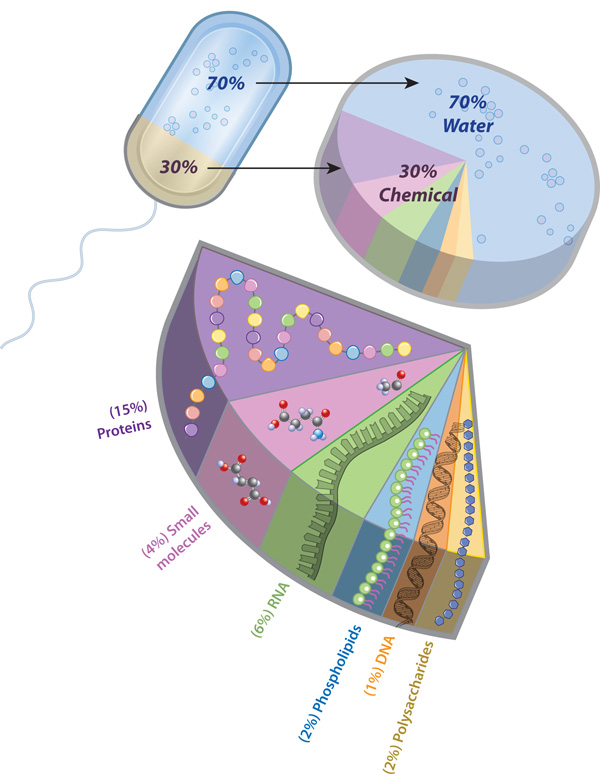
Figure 2: The composition of a bacterial cell
Most of a cell is water (70%). The remaining 30% contains varying proportions of structural and functional molecules.
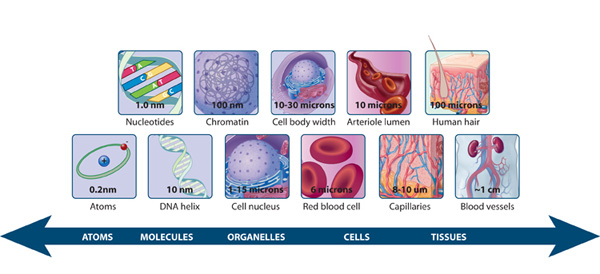
Figure 3: The relative scale of biological molecules and structures
Cells can vary between 1 micrometer (μm) and hundreds of micrometers in diameter. Within a cell, a Dna double helix is approximately 10 nanometers (nm) wide, whereas the cellular organelle called a nucleus that encloses this Deoxyribonucleic acid can be approximately chiliad times bigger (about 10 μm). See how cells compare along a relative scale axis with other molecules, tissues, and biological structures (blue arrow at bottom). Annotation that a micrometer (μm) is also known as a micron.
Source: https://www.nature.com/scitable/topicpage/what-is-a-cell-14023083/
Posted by: saezawaseen.blogspot.com
0 Response to "What Is Cell's Makeup And What Is It Made Of"
Post a Comment